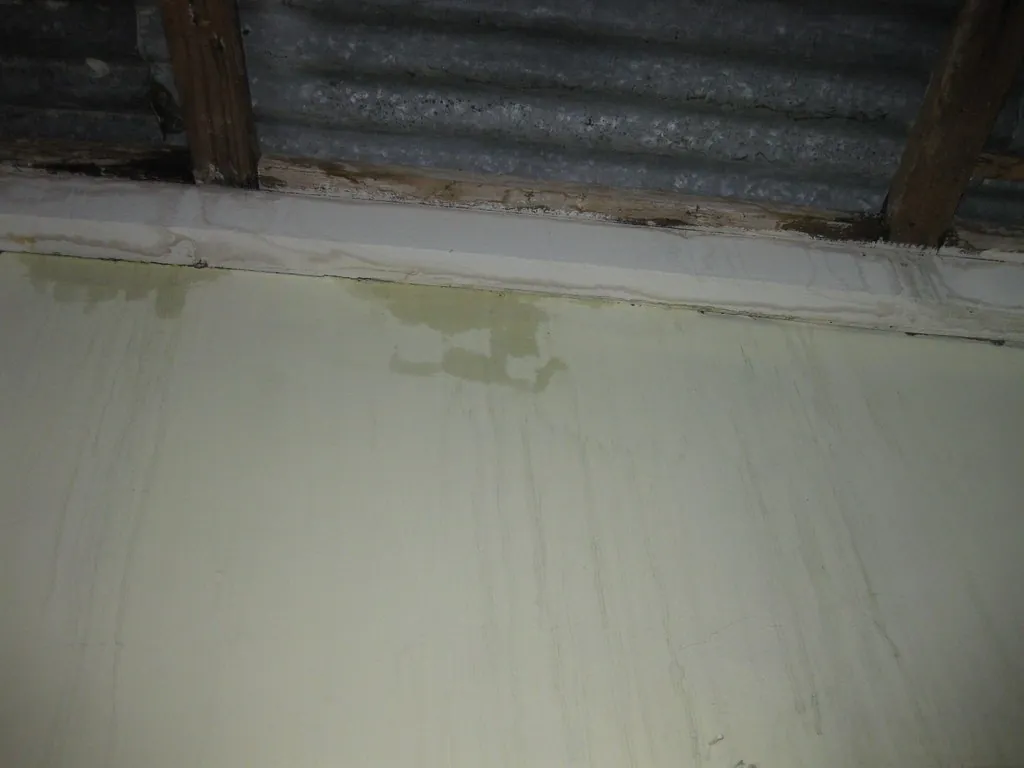
Water coming through your ceiling means water is pooling above it. A sagging ceiling can collapse, so stay clear, put a bucket under the drip, and call. That is the whole first response, and it matters more than finding the source in the first minutes. Ceiling leak emergency help in Fort Worth covers leaks from upstairs bathrooms, roof leaks and AC condensate drains, and emergency help is available day and night. The source decides the fix, but the danger decides the order: people first, then the water, then the ceiling. Do not puncture a sagging ceiling yourself to drain it. A ceiling full of water can come down in a sudden rush, and puncturing it can bring the whole section down on whoever is underneath. Call [BRAND NAME] at {{PHONE}} and read the AC leak and ceiling damage page for how the source is found and the ceiling is repaired once it is dry.
Stay Clear of a Sagging Ceiling
A ceiling that is bulging, sagging or bowing downward is holding water, and drywall gets heavier and weaker as it soaks. It can hold for a while and then fail all at once, dropping water, plaster and debris onto whatever is below. Stay out of the room if the sag is pronounced, and keep children and pets out too. Move furniture and valuables out of the way if you can do so without standing under the bulge, and put a bucket or a washing-up bowl under the drip to catch what is already coming through.
Watch for the warning signs that a collapse is getting closer: the sag deepening, cracks spreading across the ceiling, paint bubbling or peeling in a widening patch, and a steady drip turning into a stream. A stain alone is less urgent than a sag, but a stain that is growing or darkening means water is still arriving from above. If the ceiling is sagging badly, do not stay in the room to watch it. Leave, close the door, and call for help. Never stand on a chair underneath a sagging ceiling to look at it more closely.
Stop the Source if You Can
If the water is coming from an upstairs fixture you can reach, stop it there. Turn off the tap, shut the valve behind a toilet or under a sink, and stop running any appliance that is leaking above the room. If the leak is from the roof, there is nothing safe you can do from inside during rain, and climbing onto a wet roof is never worth it. If the leak only appears when the air conditioning is running, the likely cause is a blocked or disconnected condensate drain, and switching the AC off stops the flow until it can be checked.
Do not open the ceiling to look for the source. Cutting into a wet ceiling can release the trapped water suddenly, and it can also bring down a section that was still holding. The source is found from above where possible, or by a professional with moisture meters who can trace the water path without opening anything up. If you cannot identify the source safely, say so on the call: it is the crew's job to find it, not yours.

What Happens Next
When you call, say which room the ceiling is in, whether it is sagging or only stained, and whether you know what is above it: a bathroom, the roof, or the air conditioning unit. The crew checks the ceiling from below with moisture meters and, where it is safe, looks at the space above to find the source. Extraction deals with any standing water on the floor below, and the ceiling itself is assessed for how much water it is holding.
If the ceiling is holding a large volume of water, a professional may drain it in a controlled way, from the side and with the room empty. That is a controlled job done by someone who can judge the weight and the structure, and it is not the same as poking a hole from underneath. Once the water is out and the source is stopped, drying can begin. The ceiling stain guide explains how a stain can help identify the source before anyone arrives.
Drying and Repairs
A wet ceiling dries slowly, because the water is trapped between the drywall and the structure above it. Air movers and dehumidifiers dry the room below, and drying commonly takes several days. Moisture readings decide when the ceiling is dry, not the colour of the stain or how the surface feels. Some ceilings dry in place; others have soaked too far and the drywall has to come out so the joists and insulation above it can dry properly. Sagging drywall almost always has to be replaced, because it has lost its strength even if it dries.
Repairs come after drying is verified. The damaged section is cut out, the cavity is checked and dried, new drywall goes in, and the ceiling is finished and painted. The stain itself is sealed before painting, or it will bleed through the new paint. The source has to be fixed first, whether that is a plumber for an upstairs pipe, a roofer for a roof leak or an HVAC technician for a condensate drain, or the new ceiling will stain again the next time it rains or the AC runs. Keep your photos of the stain and the sag for the insurance claim.
Frequently Asked Questions
Should I poke a hole in a sagging ceiling to drain it?
No. Do not puncture a sagging ceiling yourself. The water can come down in a sudden rush, and the ceiling may already be too weak to hold, so the whole section can collapse on whoever is underneath. Controlled draining is a job for a professional who can judge the weight and the structure. Stay clear, catch the drip in a bucket, and call for help.
How do I know if my ceiling is about to collapse?
Look for a pronounced sag or bulge, cracks spreading across the ceiling, paint bubbling or peeling over a widening area, and a drip turning into a stream. A sag that is deepening is the clearest warning. If you see these signs, leave the room, keep everyone out, and call for help rather than standing underneath it to inspect it.
What causes a ceiling to leak suddenly?
The three common causes in Fort Worth are an upstairs bathroom leak, a roof leak, and a blocked AC condensate drain. A pipe that bursts upstairs, a toilet that overflows, or a heavy storm that finds a weak point in the roof can all start a ceiling leak with no warning. A leak that only appears when the AC runs usually points to the condensate drain.
Can I sleep in a room with a leaking ceiling?
Not if the ceiling is sagging. A sagging ceiling can collapse without warning, so sleep elsewhere until it has been checked. A small stain with no sag and a stopped source is a different matter, but if water is still coming through, or you are unsure, use another room for the night.
How long does a wet ceiling take to dry?
Drying commonly takes several days, and a ceiling often takes longer than a wall or a floor because the water is trapped above the drywall. Moisture readings decide when it is dry, not how it looks or feels. If the drywall has sagged or soaked through, it usually has to be replaced rather than dried in place.
Water damage in Fort Worth? Call now.
One call connects you with an independent local restoration contractor. Help is available day and night.